
Hibiscus (roselle)
Herbs
Short answer
A roselle drink may modestly lower systolic blood pressure. Pooled short trials found a lower average reading, but results varied greatly. Enjoy the tart taste; do not replace blood-pressure medicine with it. [1][2]
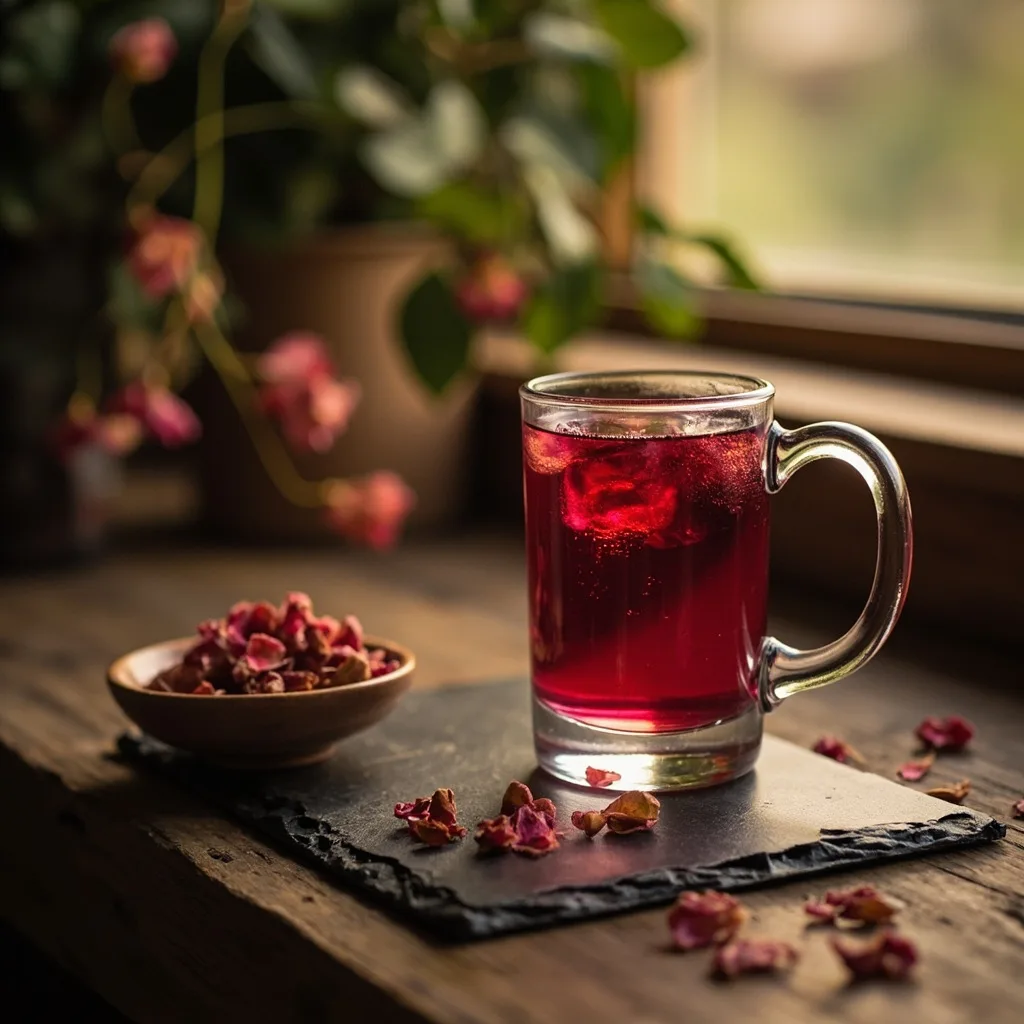
Red roselle calyces make a tart drink; studies suggest a possible reduction in systolic blood pressure.
Checked against sources; not clinician-reviewed. Not personal medical advice. Read the disclaimer
Updated: 2026-10-08
Why do people drink roselle?
- As a tart beverage: Hibiscus sabdariffa calyces make a red tea served hot or cold in many food traditions. Check added sugar in ready-made drinks. [2]
- For high blood pressure: with repeated roselle use, average systolic pressure was lower than with placebo. One cup or person may not see the same effect. [1]
- Traditional beverage: the ethnobotanical overview describes roselle as a refreshing drink and discusses its compounds and blood-pressure research. It does not establish treatment for infection, kidney disease or diabetes. [2]
What happens to blood pressure?
Across 17 studies, average upper blood-pressure readings were lower with roselle than with placebo. The benefit varied greatly between studies: your own pressure might not change. Fewer heart attacks and equivalence to blood-pressure medicine have not been shown. Check more than one reading and continue your care plan. The detailed figures are in the optional research background. [1]
What about glucose and cholesterol?
The pooled analysis found no clear fasting-glucose benefit. The average LDL difference was small and uncertain, and varied between studies. A changed lab marker does not show that roselle prevents diabetes or heart disease. Plant-pigment research in animals or cells is further removed from a treatment recommendation. [1][2]
Which hibiscus is in the drink?
The tart red drink is usually made with roselle calyces, Hibiscus sabdariffa, not just any ornamental hibiscus. Leaves, calyces, powders and extracts differ. Check the species; an extract study does not automatically apply to homemade tea. [2]
Why is there no standard course?Research and background
Across 17 studies, roselle users had an average systolic reading 7.10 mmHg lower than placebo (95% interval for the reduction: 1.20–13.00 mmHg). Between-study variation was very high (I² 95%); preparations, amounts, initial pressures and durations differed. This does not yield a standard regimen or predict one person's result. No clear difference in a medicine comparison is not proof of equal effectiveness. A sweetened bottled drink also differs from unsweetened tea. [1][2]
When to take care
If taking blood-pressure medicine, discuss sustained or concentrated roselle use with a clinician or pharmacist and keep monitoring. Long-term and pregnancy or breastfeeding safety of medicinal preparations is not established; do not start them on your own. Never stop medicine after a favourable reading. Dizziness, fainting or persistently abnormal readings need assessment. [1]
Frequently asked questions
Can hibiscus lower blood pressure?
Average systolic pressure was lower with studied roselle products than placebo, but trials differed greatly; your cup’s effect is unpredictable. [1]
Is hibiscus as good as medicine?
We do not know. The small medicine comparisons cannot show that roselle works as well. Do not replace prescribed treatment. [1]
Does it help diabetes?
The pooled trials found no clear fasting-glucose benefit. Roselle is not a diabetes treatment. [1]
Can I use ornamental hibiscus?
Do not assume so. Most studies used Hibiscus sabdariffa calyces. [2]
Is it safe in pregnancy or with medicines?
Medicinal-preparation safety in pregnancy is unknown. Discuss concentrated use, especially with blood-pressure drugs. [1]
Research and sourcesEvidence overview, methods and complete source list
What has been studied?
Roselle calyces may lower average short-term systolic blood pressure, but trials vary widely. Not a substitute for medicines.
Finding: A meta-analysis found systolic pressure averaging 7.10 mmHg lower with roselle than placebo. Large differences between trials prevent individual predictions; fewer heart events or equivalence with drugs is not proven.
Systolic pressure may fall
Evidence: Systematic review of trials; direct evidence for the stated endpoint, limited by its population and study variation.
Studied population: Adults in short repeated-use studies; long-term events not assessed.
Form or context: Roselle/Hibiscus sabdariffa calyx preparations varied; no uniform dose.
Uncertainty: Marked between-study heterogeneity; cardiovascular events and drug equivalence untested.
Finding: Pooled trials found no clear fasting-glucose benefit. This does not support diabetes treatment.
No clear fasting-glucose effect
Evidence: Systematic review of short trials; no significant pooled fasting-glucose effect.
Studied population: Adults in short repeated-use roselle trials; no diabetes-outcome trial.
Form or context: Varied roselle calyx drinks/extracts; no proven dose.
Uncertainty: No demonstrated average fasting-glucose benefit or diabetes prevention.
Finding: Average LDL was slightly lower but borderline and inconsistent between trials. This does not establish protection against heart disease.
LDL finding remains uncertain
Evidence: Systematic review of short, heterogeneous trials; borderline LDL marker difference, not a clinical outcome.
Studied population: Adults in short roselle trials; cardiovascular events not assessed.
Form or context: Varied roselle calyx preparations, not medicine replacement.
Uncertainty: Borderline heterogeneous marker result, not evidence for fewer cardiovascular events.
Safety: Discuss concentrated roselle with a clinician if taking blood-pressure drugs. Long-term and pregnancy medicinal safety are unknown; do not stop medicines.
Sources
- A systematic review and meta-analysis of the effects of Hibiscus sabdariffa on blood pressure and cardiometabolic markers · Nutrition Reviews · 2022 · Systematic review
- Hibiscus sabdariffa L., roselle calyx, from ethnobotany to pharmacology · Journal of Experimental Pharmacology · 2012 · Review article