
Ginger
Foods
Short answer
Ginger flavours meals and may ease some forms of nausea, particularly pregnancy-related nausea in supplement studies. That does not prove every tea or capsule will help. Assessments disagree somewhat on motion sickness; persistent vomiting or pregnancy calls for care rather than simply taking more ginger. [1][2][3]
A pungent rhizome used in cooking; particular ginger preparations have been studied for nausea and period pain.
Checked against sources; not clinician-reviewed. Not personal medical advice. Read the disclaimer
Updated: 2026-10-08
What do people use ginger for?
- Pregnancy-related nausea: four small controlled studies in a review reported less nausea or vomiting with oral ginger than placebo. Ask for pregnancy-care advice about any product; dinner is not a studied dose. [1][3]
- Motion sickness: most studies discussed by NCCIH were not positive, while EMA accepts a particular powdered form for prevention. Tea is not established as equivalent. [1][2]
- Mild cramps, bloating and short-lived appetite loss: some products have documented traditional use; persistent pain needs another explanation. [2]
- Period cramps: supplement research suggests possible relief; this does not guarantee a benefit from ginger in food. [1]
What do studies say for each symptom?
The clearest positive signal in these sources concerns oral ginger for pregnancy-related nausea. A review of four controlled trials reported benefit, but questions about a maximum safe amount and longer use remain. For motion sickness NCCIH is cautious after largely negative studies, whereas EMA accepts a specific powder for prevention. Added benefit during chemotherapy or after surgery remains uncertain; do not change prescribed anti-nausea medicines yourself. [1][2][3]
Which form matters?
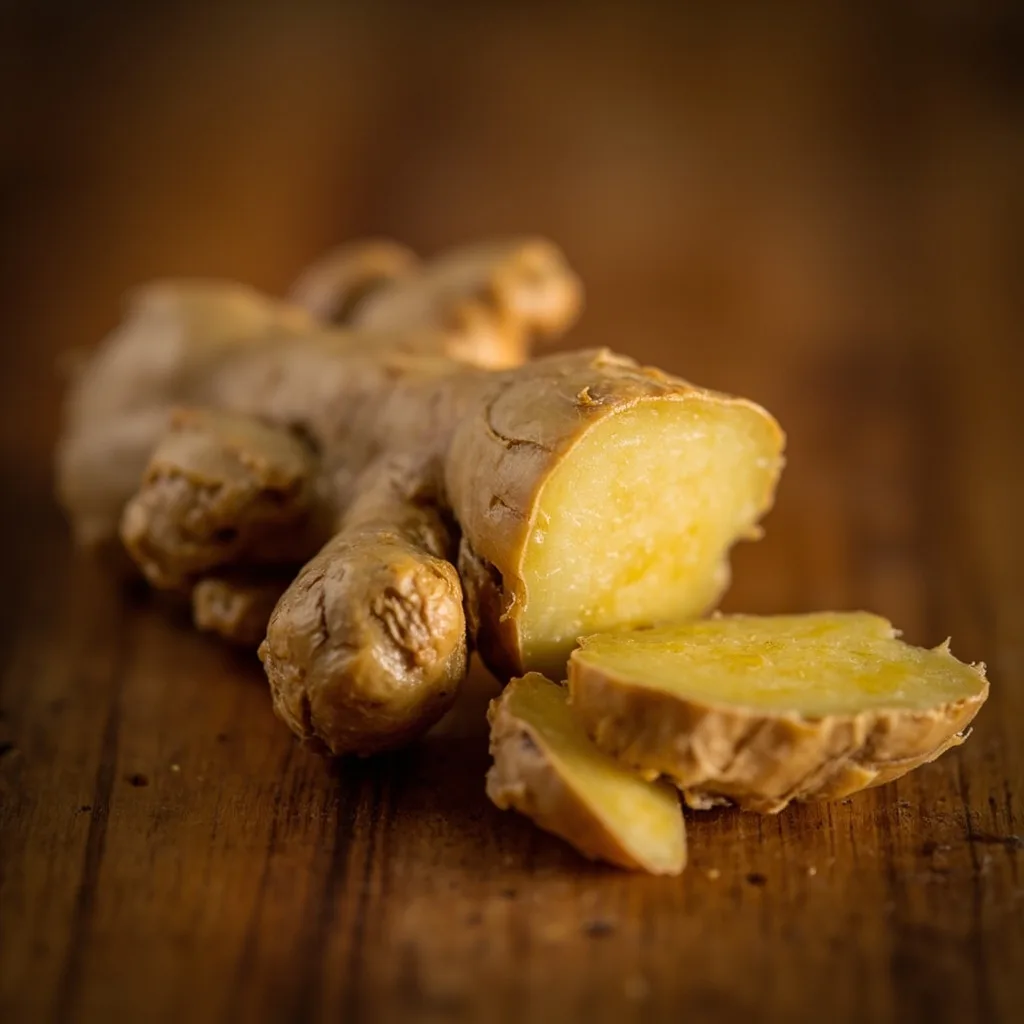
The so-called ginger root is the rhizome of Zingiber officinale. Fresh ginger in dinner, tea, dry powder, tincture and extract provide different amounts of active compounds. Most trials used supplements rather than meals. For a medicinal product use the leaflet for its form, age group and indication: an EMA quantity for powder is not a home-tea or pregnancy dosing scheme. Culinary use does not require a medicinal dose. [1][2]
Side effects, medicines and pregnancy
Oral ginger may cause belching, heartburn, diarrhoea or mouth and throat irritation; allergy is possible. Ask a pharmacist about sustained concentrated use with medication, especially anticoagulants, without assuming a universal proven bleeding interaction. NCCIH describes possibly reassuring pregnancy data, but EMA advises avoiding medicinal preparations as a precaution; breastfeeding safety data are insufficient. This is not a ban on normal food seasoning. Discuss supplements in pregnancy with your maternity clinician. [1][2]
What about period pain and stiff knees?
NCCIH describes possible reduction in period-cramp severity with supplements and some suggestion of knee osteoarthritis relief, though much joint research was low-quality and topical ginger was not convincing. Ginger does not reverse arthritis. Unusually heavy bleeding or a hot swollen joint with fever needs assessment. [1]
When to seek help
Enjoy ginger in meals to taste. If nausea worsens or you cannot drink, seek help rather than increasing a dose. This is especially important for vomiting in pregnancy, dehydration, severe abdominal pain or vomiting blood. A travel trigger, food poisoning and a drug side effect call for different care. [1][2]
Frequently asked questions
Can ginger help nausea?
Does ginger prevent motion sickness?
Can I take ginger in pregnancy?
What about bloating?
EMA documents traditional use of particular products for mild cramps, gas and brief appetite loss. Persistent or severe symptoms need assessment. [2]
Research and sourcesEvidence overview, methods and complete source list
What has been studied?
Ginger preparations may ease pregnancy nausea; motion-sickness assessments differ by product. Food is not a medicinal dose.
Finding: Four controlled trials in a review reported improvement with oral ginger, not ordinary tea. EMA advises avoiding medicinal ginger in pregnancy as a precaution: consult maternity care.
Possible relief of pregnancy nausea
Evidence: Institutional evidence summary of human studies; promising but preparation and population limit transfer.
Studied population: Pregnant participants with nausea/vomiting.
Form or context: Studied ginger supplements, not reliably an ordinary tea.
Uncertainty: Preparations and populations differ; no universal dose or response.
Sources: Ginger: Usefulness and Safety, European Union herbal monograph on Zingiber officinale Roscoe, rhizoma, The effectiveness and safety of ginger for pregnancy-induced nausea and vomiting: a systematic review.
Finding: Most NCCIH-reviewed trials were not positive; EMA accepts a particular powder for prevention. This does not establish benefit of homemade tea.
Motion sickness: conflicting assessments
Evidence: Human evidence concerns ginger preparations; other claims rely on regulatory assessment or laboratory work.
Studied population: People with motion sickness, not pregnancy-nausea participants.
Form or context: Specific powdered preparation in EMA assessment; most other studies varied.
Uncertainty: EMA product-specific regulatory conclusion differs from mixed broader studies.
Sources: Ginger: Usefulness and Safety, European Union herbal monograph on Zingiber officinale Roscoe, rhizoma
Safety: Heartburn and diarrhoea can occur. Discuss pregnancy supplements; EMA prefers avoiding medicinal ginger as a precaution. Persistent vomiting needs care.
Sources
- Ginger: Usefulness and Safety · National Center for Complementary and Integrative Health · 2025 · Public health information
- European Union herbal monograph on Zingiber officinale Roscoe, rhizoma · European Medicines Agency / HMPC · 2025 · Regulatory assessment
- The effectiveness and safety of ginger for pregnancy-induced nausea and vomiting: a systematic review. · Women and Birth · 2013 · Systematic review